Your support puts coordinated weather balloons and surface instruments into the field for the 2027 storm season. Every step is shared through the free app, livestreamed field operations, and published results.
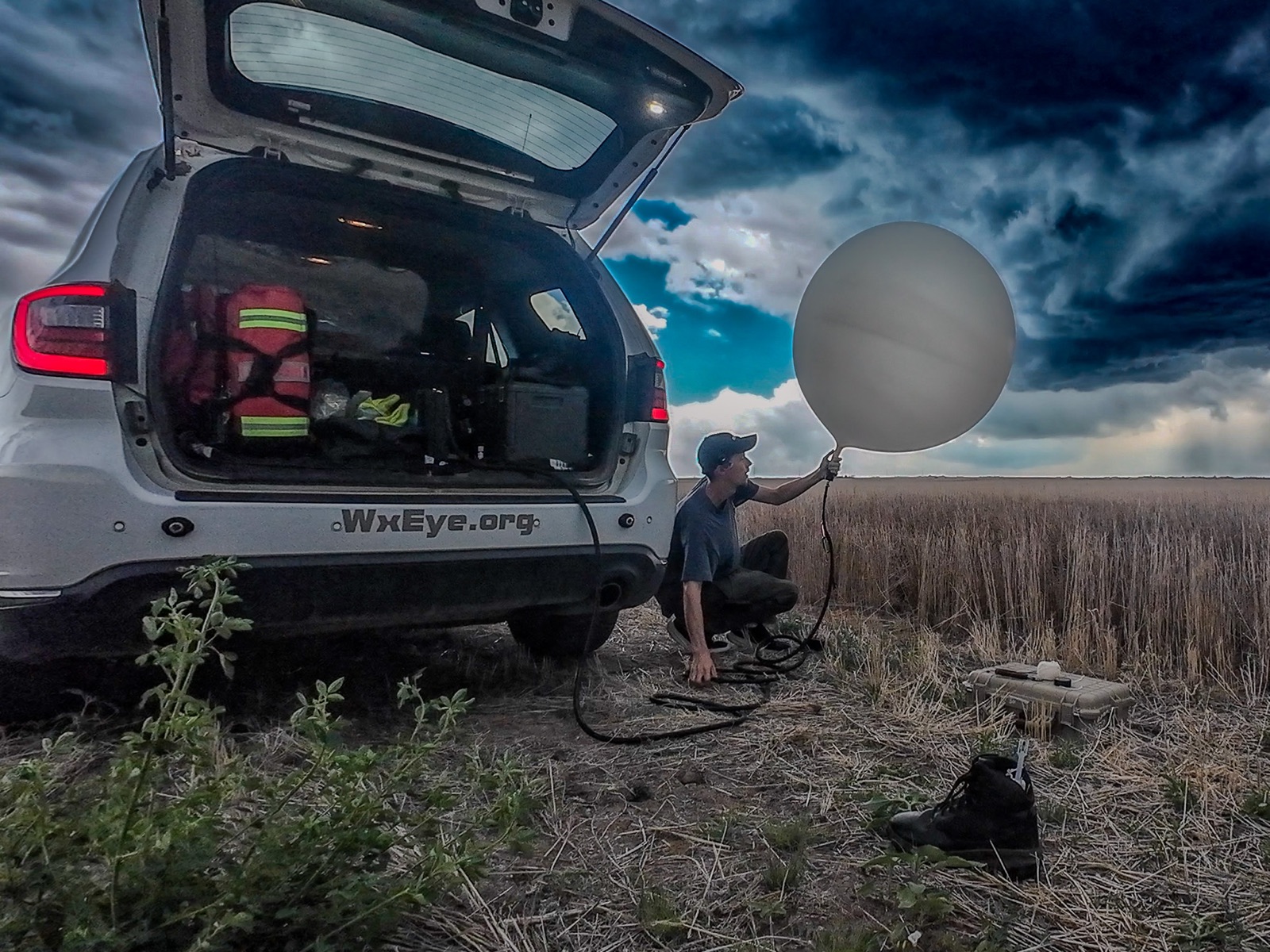
Recon Weather is a volunteer effort. Our team contributes time, resources, and equipment to make this mission possible. We’re asking our audience to help fund the instruments, launch supplies, and shared equipment that put those contributions to work in the field. Together, the team and our supporters make the research, and the opportunity to follow it live, possible.
We will launch sondes from several locations at nearly the same time and compare the profiles.
Compare wind profiles on different sides of an outflow boundary at nearly the same time. Standard radiosondes add temperature and moisture context, and wind-only units extend wind sampling. Vehicle observations help identify the boundary at the surface, and IsoPods contribute surface pressure observations where practical.
Measure how the low-level wind environment varies around the same supercell, and examine what a single sounding would miss. Coordinated balloon launches compare different storm-relative locations, repeated when practical to help separate differences in space from changes over time. Success does not depend on a tornado occurring.
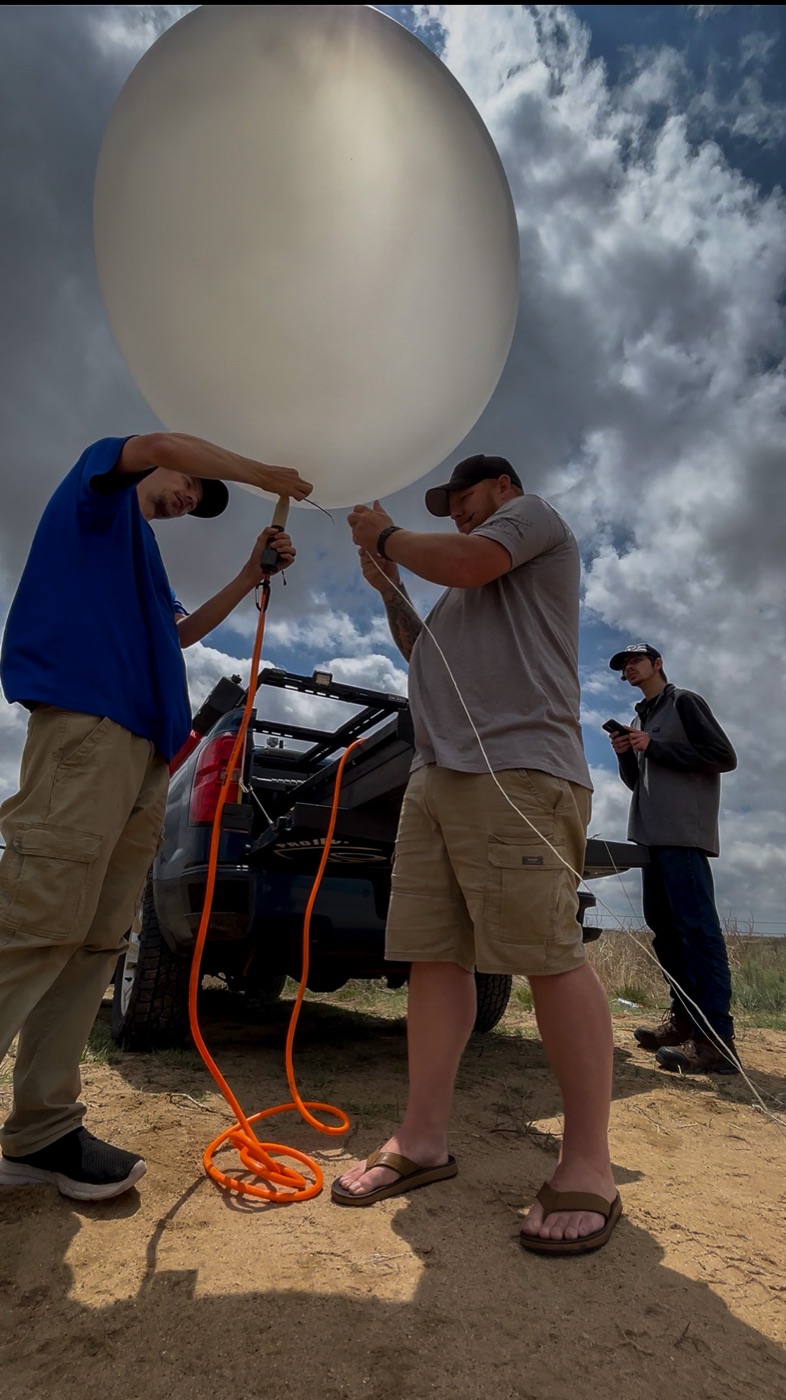
One balloon gives one vertical profile from one place. Several balloons launched at nearly the same time from different positions give profiles we can compare directly, which shows what a single observation can miss.
Coordinated soundings are the core of the mission. Surface pressure and vehicle observations add context at ground level. The 2027 findings and practical lessons will inform the 2028 research plan.
Balloon-carried instruments that observe temperature and moisture through the atmosphere, together with wind information, giving thermodynamic context for the storm environment.
Balloon-carried units that produce wind profiles from their movement. A lower cost per unit lets us extend coordinated wind coverage.
Distributed surface pressure measurements to investigate the pressure changes that accompany storm boundaries and circulation, and how they move through the network. Planned output: measured pressure changes animated over radar.
Mobile wind and surface observations collected from team vehicles, helping locate boundaries at ground level.
IsoPod units mounted on vehicles for additional mobile surface pressure observations.
A second 3D printer adds the production capacity our current printer lacks. Helium fills the balloons, and hotspots keep field data flowing off the instruments.
Current itemized estimates. This is a partial budget: some costs are still being priced and are listed below the table.
| Item | Quantity | Estimate |
|---|---|---|
| Standard thermodynamic radiosondes | 200 | $9,000 |
| GPS / wind-only radiosondes | 160 | $5,600 |
| Helium | Allowance | $3,500 |
| Additional vehicle data units with wind | 3 | $1,827 |
| IsoPod pressure network devices | 32 | $1,280 |
| Additional Bambu P1S 3D printer | 1 | $550 |
| IsoPod vehicle units, pressure only | 6 | $240 |
| Seasonal hotspot data packs | 6 | $180 |
| USB Wi-Fi hotspot devices | 8 | $128 |
| Current partial estimate | $22,305 | |
| Provisional allowance for remaining costs | $2,695 | |
| Proposed fundraiser goal | $25,000 |
Units our team has built toward the 2027 season, updated as they come off the bench.
Recon Weather puts field data, soundings and live radar on your phone at no cost.
Open the app →We livestream field operations so you can ride along on launch days.
What we measure, and what we learn from it, will be published after the season.
Every contribution goes toward instruments, launch supplies and shared equipment for the field team. Sharing the campaign helps just as much.